
Quick guide
An aura, in the usual description, is a coloured field of energy around a person that a sensitive observer can see and that reflects mood, health and character. That is an interpretive framework, not an established fact, and it is worth saying so once. What people do see, when they try the classic exercises, is real and has an ordinary explanation: afterimages and edge effects produced by the eye when it holds a steady gaze on a high-contrast boundary. Aura photographs are real too, but the colours come from a hand sensor that measures skin conductance and temperature and maps the numbers onto a colour overlay; the camera never records anything around the body. The one controlled test of practitioners’ ability to detect a human energy field, published in 1998, found detection no better than guessing. A reader who describes your aura is describing your presentation and mood, and that can still be worth hearing. This guide covers the history from halos to photo booths, what the eye is doing, what the colours usually reflect, how to do the exercises, aura cleansing as ordinary self-care, and when a halo or fringe in your vision needs an optician.
A short history, from halos to photo booths
Light around the head has marked holiness in art for two thousand years, from Buddhist and Hindu sculpture to the gold discs behind Christian saints. Those halos were symbols, not observations. The modern aura arrived with Theosophy in the late nineteenth century, when writers such as Charles Leadbeater published coloured plates of the layered fields they said clairvoyants could see, each colour keyed to a moral or emotional state. Most of today’s colour meanings descend from those plates. In 1911 the London physician Walter Kilner claimed that dyed glass screens made the aura visible to anyone; the effect is now understood as an afterimage produced by the dye. In 1939 Semyon Kirlian photographed the glow around objects placed on a charged plate, which was later shown to be an electrical corona discharge shaped by moisture and pressure, not a life field. The aura camera of the 1970s combined a portrait with a hand sensor, and it remains the machine used in most aura photography booths today.
What the eye is doing when you see an aura
The classic exercise asks you to hold a soft, steady gaze on a hand against white paper, or on a person against a plain wall, for a minute or more. Within that time the light-sensitive cells looking at the boundary adapt, and when the eye makes its small involuntary movements, a faint fringe appears along the edge, often in a colour complementary to whatever you were looking at. This is an afterimage, the same effect that leaves a dark spot after a camera flash, and it is strongest at high-contrast edges under steady light. Peripheral vision adds to it, because the edge of the visual field is more sensitive to faint light and motion and less able to report colour accurately, so a pale shimmer is easy to read as a glow. None of this means the exercise is a trick. It means that what you see is produced by your own visual system, which is why everyone sees roughly the same thing regardless of who is being looked at.
What aura photographs measure
An aura photograph is a double exposure. The first exposure is an ordinary portrait. The second is a colour overlay generated from a hand plate you rest your palms on, which reads skin conductance, and in some models temperature, at several points. Those readings are mapped, by rules the manufacturer chose, to colours and positions on the overlay: higher conductance might become red near the shoulders, lower might become blue. The overlay is then printed over the portrait so that the colour appears to surround you. Skin conductance rises with warmth, exertion, nervousness and caffeine, and falls with cool hands and calm, so two photographs an hour apart can differ completely. That is not a changing energy field; it is a changing pair of hands. The result is a keepsake and a fair record of how keyed up you were in the booth, and nothing more.
Has an energy field ever been detected?
The best-known test is simple enough to repeat at a kitchen table. In 1998 a study published in the Journal of the American Medical Association asked practitioners who said they could feel the human energy field to identify, through a screen, which of their two hands an experimenter’s hand was hovering over. Across more than two hundred trials they were correct about 44 per cent of the time, which is what guessing produces. The study is indexed on PubMed and its design has not been overturned. No instrument has recorded a field around the body beyond ordinary heat, humidity and the faint electrical activity of muscles and nerves, none of which extends as a coloured envelope. The sensible reading is that aura perception is an experience of the observer, not a measurement of the observed. That still leaves room for it to be interesting, which is where the colours come in.
| Colour | What readers usually say | What it usually reflects |
|---|---|---|
| Red | Energy, passion, anger, strong will | Visible animation, flushed skin, a loud or fast manner |
| Orange | Creativity, confidence, sociability | Warmth in conversation, expressive gestures |
| Yellow | Optimism, intellect, playfulness | Quick speech, humour, an upbeat tone |
| Green | Healing, growth, balance | A calm, steady manner; often a caring profession |
| Blue | Calm, communication, sensitivity | Quiet voice, measured pace, careful listening |
| Purple or violet | Intuition, spirituality, imagination | Interest in the reading itself; dreamy or reflective talk |
| White or silver | Purity, clarity, protection | Composure; sometimes the reader’s default for a client they cannot place |
| Grey, brown or dark | Fatigue, blocks, negativity | Tiredness, low mood, or a reader setting up a paid fix |
What the colours usually tell you about a person
Because no field is being observed, a reader’s description of your aura colour is a description of you as you present in that moment: your posture, pace, warmth, tiredness and how you are dressed, filtered through the colour meanings inherited from Theosophy. That is not nothing. A good reader is a careful observer, and hearing that you came across as guarded, keyed up or flat can be useful feedback. The table above pairs each colour with what readers say and with what usually produces the impression. Two cautions. A description of a dark, grey or torn aura followed by an offer to repair it for a fee is a scam script, and the right response is to leave and, if money changed hands, report it to the Canadian Anti-Fraud Centre. And no aura colour indicates illness; a reader who links a colour to a diagnosis is guessing with your health. Our companion on the significance of a white or silver aura goes deeper on one colour.
- 1. Set upPlain white paper or a pale wall, even daylight, no glare. Sit so your eyes are level with the target.
- 2. GazeRest your eyes just past the edge of the hand or head. Do not stare hard. Breathe normally for sixty seconds.
- 3. NoticeA pale fringe forms along the edge, then a faint complementary colour. Blink and it shifts; that is the afterimage.
- 4. RecordWrite down what you saw and the light conditions. Repeat another day and compare; the pattern will be stable.
How to do the classic exercises, and what you will see
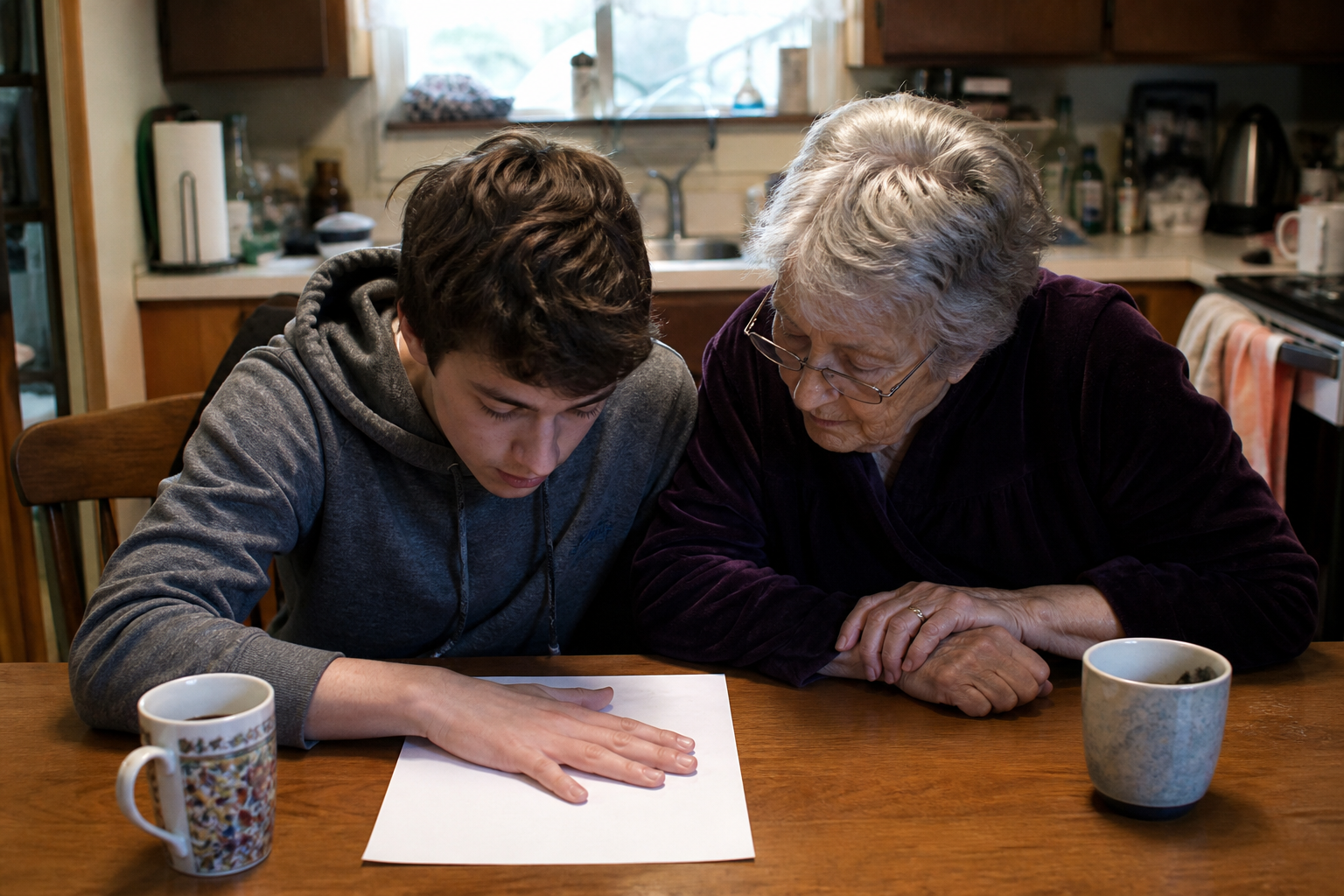
The hand exercise: place one hand flat on white paper in even light, relax your gaze on the fingertips for about a minute, and watch the edge. A thin, pale outline appears first, then a faint tint that changes if you shift your eyes. The partner exercise: have someone stand against a plain light wall, look at a point just above their head, and let your peripheral vision do the work; a soft glow around the head and shoulders is the usual report. The mirror exercise is the same thing done to yourself. In every case, what appears is consistent with afterimages and edge adaptation, which is why the outline is always brightest where contrast is highest and why it fades when you look directly at it. Enjoy the exercises for what they are: a way to notice how vision works and a calming minute of focused attention. Our companion on a simple exercise to learn psychic energy manipulation covers a related hands-based practice.
Cleansing the aura as ordinary self-care
Aura cleansing rituals, such as a salt bath, a walk in the wind, a shower taken with intention, or a few minutes of slow breathing, are popular and mostly harmless. Stripped of the framework, they are rest, water, fresh air and a pause, all of which reliably improve mood, and that is the honest reason they work. Two things to avoid. Burning white sage for cleansing borrows a closed ceremony from several Indigenous nations and has driven over-harvesting; a rosemary sprig, an open window or a candle-free breathing practice does the same job without the concern. And paid cleansing, especially from a reader who first told you your aura was damaged, is the curse-removal scam under another name. Our companions on cleansing your aura of negativity and reaching a higher vibration give the practical routines, and how to keep your chakras open covers the related seven-centre framework.
Health cautions: when a halo is a symptom
Afterimages appear only while you are holding a steady gaze and fade within seconds of looking away. Haloes or coloured rings around lights that you see without staring, fringes that persist, a shimmering arc that grows across your vision, sudden flashes or floaters, or a glow around objects that appears with headache or eye pain are different, and they can indicate migraine, cataract, raised eye pressure or a retinal problem. Book an optician or optometrist promptly for persistent haloes, and treat sudden vision changes with pain, nausea or a curtain across the field of view as an emergency. An aura reader cannot tell the difference between a spiritual glow and a medical symptom, and should not try.
Key takeaways
- The aura is an interpretive framework; what people see in the exercises is an afterimage produced by the eye.
- Aura photographs map skin conductance from a hand plate onto a colour overlay; nothing around the body is recorded.
- The 1998 controlled test found practitioners detected a human energy field no better than chance.
- A reader’s colour description reflects your mood and presentation, and can be useful feedback on that basis.
- A damaged aura plus a paid repair is a scam; haloes without staring are a reason to see an optician.
Related reading
- Cleanse Your Aura of Negativity
- The Significance of a White or Silver Aura
- How to Keep Your Chakras Open
- Reaching a Higher Vibration
- A Simple Exercise to Learn Psychic Energy Manipulation
Frequently asked questions
1. What is an aura?
In popular use, an aura is a coloured field of energy said to surround a person and reflect their mood, health and character. It is an interpretive framework rather than an established fact. The experiences associated with it, seeing a fringe of light around a person or a hand, have ordinary explanations in how the eye works.
2. Can people really see auras?
People do see something when they try the exercises: a pale outline and a faint complementary tint along a high-contrast edge. That is an afterimage combined with edge adaptation and peripheral vision. It is consistent and repeatable, and it is produced by the observer’s visual system rather than by the person being observed.
3. What is an afterimage and why does it matter for auras?
An afterimage is an impression that persists after the light stimulus has changed, like the spot left by a camera flash. When you hold a steady gaze on an edge, the cells adapt, and small eye movements produce a fringe in the complementary colour. The aura exercises are set up in exactly the conditions that create afterimages.
4. What do aura photographs actually measure?
They combine a portrait with a colour overlay generated from a hand plate that reads skin conductance, and in some models temperature. The readings are mapped to colours by rules the manufacturer chose and printed around the body. Warm, nervous or caffeinated hands produce one picture; cool, calm hands produce another.
5. Is Kirlian photography proof of an aura?
No. Kirlian images show a glow around objects placed on an electrically charged plate. The glow is a corona discharge whose shape depends on moisture, pressure and the electrical properties of the object. A coin produces one, and a leaf’s glow changes as it dries. It records electricity, not a life field.
6. Has an energy field around the body ever been detected?
Not beyond ordinary heat, humidity and the faint electrical activity of nerves and muscles, none of which forms a coloured envelope. In a 1998 controlled test, practitioners who said they could feel a human energy field identified its position correctly about 44 per cent of the time, which is chance.
7. Where did aura colour meanings come from?
Mostly from Theosophical writers in the late nineteenth and early twentieth centuries, who published coloured plates of layered fields with each colour keyed to an emotional or moral state. Later authors simplified and repeated those tables. Halos in older religious art were symbols of holiness, not descriptions of something seen.
8. What does a red aura mean?
Readers usually describe red as energy, passion, strong will or anger. In practice the description tends to follow visible animation: a flushed face, fast speech, a loud or forceful manner. It is a comment on how you are presenting in the moment rather than a measurement of anything around you.
9. What does a blue aura mean?
Blue is usually read as calm, communication and sensitivity. The impression generally comes from a quiet voice, a measured pace and attentive listening. Like every colour, it reflects the reader’s judgement of your mood and manner during the reading, and can change between readings as your mood changes.
10. What does a dark, grey or muddy aura mean?
Readers often say it shows fatigue, blocks or negativity. Sometimes that reflects real tiredness or low mood. Often it is the opening of a script: the aura is damaged, and a paid cleansing or removal will fix it. Treat that offer as a scam, leave, and report it to the Canadian Anti-Fraud Centre if money changed hands.
11. Can an aura reading tell me about my health?
No. No aura colour indicates illness, and no reader can detect a condition by looking at you. A reader who links a colour to a diagnosis, or tells you to change or stop treatment, is guessing with your health. Take health concerns to a family doctor, and vision symptoms to an optometrist.
12. How do I see my own aura?
Stand in front of a mirror against a plain pale wall in even light, look at a point just above your head, and keep your gaze soft for about a minute. A pale outline and then a faint tint will appear around the head and shoulders. It fades when you look directly at it, which is the afterimage behaving as expected.
13. How do I do the hand on white paper exercise?
Place one hand flat on white paper in even daylight without glare. Rest your gaze on the fingertips, not staring hard, and breathe normally for about sixty seconds. A thin pale outline appears along the fingers, then a faint colour that shifts when you move your eyes. Write down what you saw and repeat another day.
14. Why do I see the same colours no matter who I look at?
Because the effect is produced by your eyes, not by the person. Afterimages depend on the contrast between the subject and the background, the lighting and how long you hold your gaze, so the same setup produces the same fringe regardless of who stands in it. That consistency is the clearest sign of what is happening.
15. What is aura cleansing and does it work?
Aura cleansing covers rituals such as a salt bath, a walk in fresh air, a shower taken with intention, or slow breathing. They tend to work because they are rest, water, air and a pause, which improve mood on their own. Avoid paid cleansing offered after a reader has told you your aura is damaged.
16. Is smudging with white sage a good way to cleanse an aura?
Burning white sage as a cleansing ritual borrows a closed ceremony from several Indigenous nations, and commercial demand has led to over-harvesting of the plant. If you want a scented ritual, a rosemary sprig or an open window does the job. The calming effect comes from the pause, not from the smoke.
17. When should I see an optician about seeing haloes or fringes?
When they appear without staring, persist after you look away, or come with headache, eye pain, flashes, floaters or a shadow across part of your vision. Those can point to migraine, cataract, raised eye pressure or retinal problems. Book an optometrist promptly, and treat sudden changes with pain or nausea as an emergency.
18. Is it worth paying for an aura reading?
It can be, if you treat it as feedback on how you come across rather than as a measurement. A careful reader will describe your mood, energy and manner in colour language, and that can be worth hearing. It is not worth paying for any follow-up cleansing, repair or protection, which is where the scams live.
Evidence note: The aura is treated here as an interpretive framework. Afterimages and edge adaptation are standard topics in vision science, aura cameras are documented as skin-conductance devices, and the 1998 controlled test of energy field detection found chance-level performance. Nothing here is medical advice. Haloes or fringes seen without staring, or any sudden vision change, are reasons to see an optometrist or emergency care. Paid aura repair after a reading is a scam; report it to the Canadian Anti-Fraud Centre.
I appreciate the breakdown of each chakra and its associated colors and qualities. It helps to differentiate how each chakra impacts our mental and physical health.
The concept of auras being visible in photographs is intriguing. I wonder what kind of scientific evidence supports this phenomenon and how it can be measured.
The article provides a detailed overview of the different layers of the aura and their corresponding functions. It’s interesting how each layer correlates with various aspects of our physical and spiritual well-being.
Reading about the different layers of the aura and their effects on our well-being provides a comprehensive understanding of this spiritual concept. Including more scientific perspectives would enhance the credibility of this information.
The article offers an in-depth look into the different aspects of auras and chakras. However, it would be beneficial to include references to scientific studies that explore these topics further.