

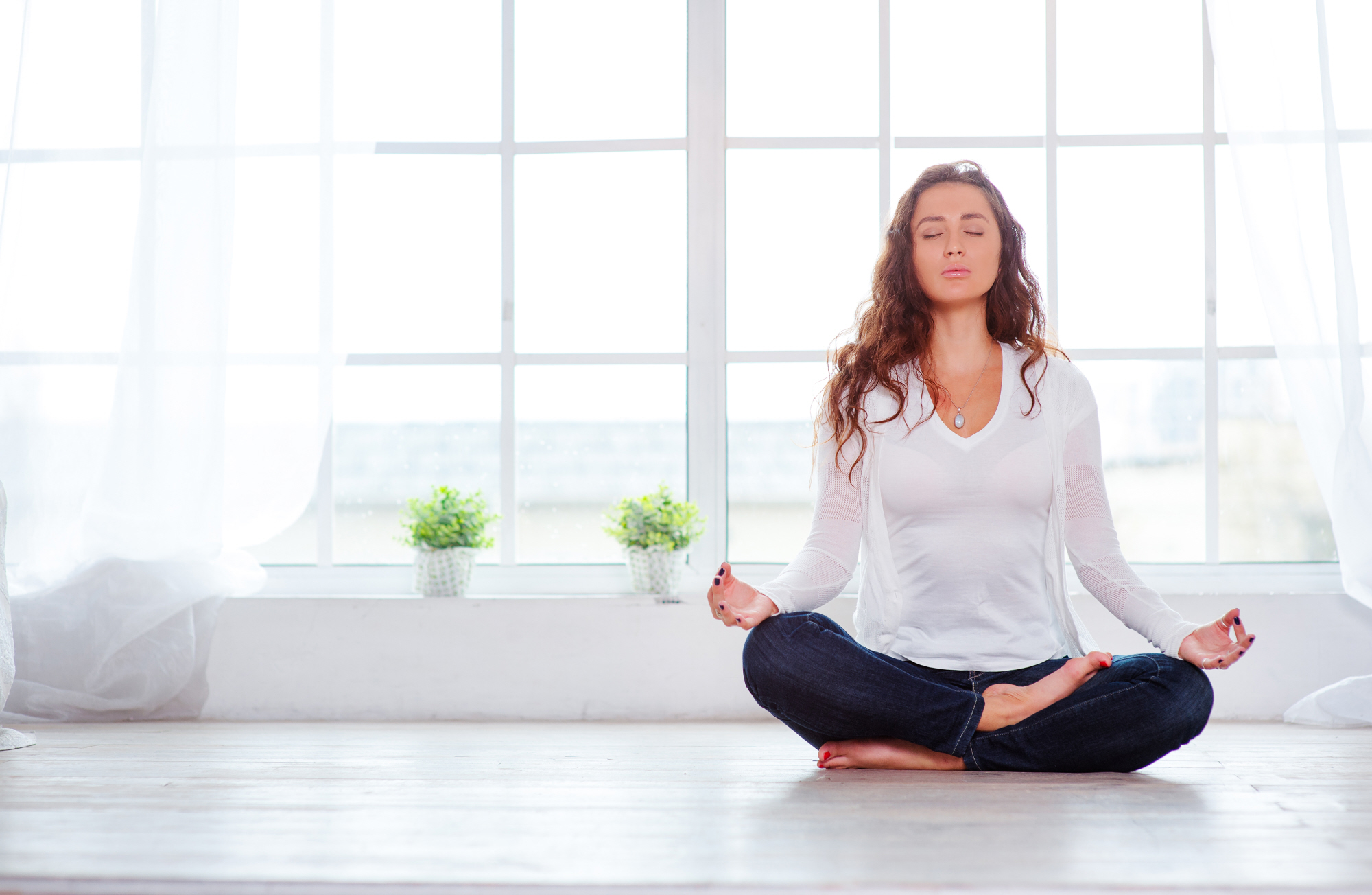
Quick guide
A meditation space at home does one job: it lowers the effort of sitting down. That is the whole point. You do not need a spare room, a view, or anything bought for the purpose. You need a spot that is always ready, a way to sit that your body can hold for ten minutes, a fixed time, and a plan for light and noise. This article gives three approaches for small homes. The corner: a cushion or folded blanket in a fixed corner that nobody else uses. The chair: a specific chair, set up for upright sitting, for anyone who cannot sit on the floor. The kit: a small bag with a cushion, a timer and an eye mask, for shared rooms and apartments where no corner is free. It then covers what actually helps you sit (a cue, a time, a timer, soft light, a noise plan, a short warm-up) and what to skip (expensive gear, candles left unattended, scented products in a closed room, screens, and anything sold as raising energy or clearing vibrations). Research on meditation supports moderate benefits for stress, some pain and sleep; it is not a treatment for any condition, and a good space is about consistency, not atmosphere.
Three approaches for small spaces
The corner approach works when you have one metre of floor that can be left alone. Choose a corner facing a wall or a blank surface rather than the room, put a cushion or a folded blanket there, and leave it in place. The visual cue is what matters: a cushion that is always out gets sat on, and a cushion in a cupboard does not. The chair approach suits anyone with knees, hips or a back that objects to the floor, which is most adults. Pick one chair, ideally with a firm seat and no arms, and sit forward of the backrest with feet flat and hands in your lap. A dining chair is better than an armchair, which invites slumping. Keep a small object on the seat when not in use, a folded scarf is enough, so that it reads as reserved. The kit approach is for shared bedrooms, studio apartments and homes with children, where nothing stays put. Fill a cloth bag with a small cushion, a kitchen timer or an old phone in airplane mode, and an eye mask, and keep it by the bed. The kit goes wherever is quiet at the time, and the ritual of unpacking it becomes the cue.
What actually helps you sit
A fixed time helps more than any object. Immediately after waking, before the first coffee, or immediately after arriving home, before sitting on the sofa, are the two slots that survive contact with real life, because they attach to something that already happens. A timer removes the question of how long, which is one of the mind’s favourite escapes. Set it, put it out of sight, and stop when it sounds. Soft light helps: a lamp rather than an overhead fixture, or a window with a curtain half drawn. Bright light keeps the eyes searching. Noise needs a plan rather than a solution: a fan or a white-noise app covers traffic and neighbours, foam earplugs cut the rest, and beyond that the sound is simply part of the practice. A short warm-up of two or three stretches for the hips and shoulders makes the first five minutes less about discomfort. Finally, a posture you can hold: upright, not rigid, with the weight settled and the hands resting. The NCCIH review of meditation and mindfulness notes that regular practice is what the studied benefits depend on, and regularity is exactly what a low-effort space buys you. Our guide to self-hypnosis for health uses the same setup for a related practice.
| Element | Helps because | Cheap version |
|---|---|---|
| A fixed spot | The visual cue removes the decision to start | A folded blanket left in a corner |
| A fixed time | Attaching practice to an existing habit makes it survive busy weeks | First thing after waking, or on arriving home |
| A timer | Removes the question of how long, which is a common exit | A kitchen timer, or an old phone in airplane mode |
| A seat that suits your body | Discomfort in the first five minutes is the main reason people stop | A dining chair, or a cushion on a folded towel |
| Soft light | Bright light keeps the eyes and mind searching | A lamp, or a half-drawn curtain |
| A noise plan | Unmanaged noise turns every session into a struggle | A fan, a free white-noise app, or foam earplugs |
| A short warm-up | Loosening hips and shoulders lowers physical distraction | Three stretches before sitting |
| An eye mask | Lets you practise in a bright or busy room | Any sleep mask |
| A blank view | Facing a wall or plain surface reduces visual pull | Turn the chair or cushion to face a wall |
What to skip
Most of what is sold for meditation spaces makes the space nicer to photograph and no easier to use. A folded blanket does the job of an expensive cushion, and buying gear can become a substitute for sitting. Candles are pleasant and are also an open flame near fabric in a room where you plan to close your eyes; if you want one, use a battery version. Scented products in a small closed room give many people headaches, and incense smoke is something you are then breathing for ten minutes. Screens do not belong in the space, including the phone you actually use, which is why an old phone in airplane mode or a kitchen timer is better. Anything sold as raising the energy of the room, clearing negative vibrations or aligning chakras belongs to interpretive frameworks that some people enjoy; they are not measurable and not what makes a practice work, so treat them as decoration or skip them. Sage smudging, in particular, is a ceremony belonging to specific Indigenous nations, and sage bundles sold as home clearing products raise both cultural and supply concerns; opening a window does the job of freshening a room. Our pages on steps to zen and inner peace and having alone time to make the spirit strong continue the practical thread.
- Expensive cushions, benches and altars bought before the habit exists
- Candles left burning while your eyes are closed; use a battery version if you want the glow
- Incense and strong scents in a small closed room
- The phone you actually use, even as a timer; screens pull attention
- Products sold as clearing energy, raising vibration or aligning chakras; enjoy them as decoration or skip them
- Sage bundles marketed for home clearing; open a window instead
- 1. Pick the approachCorner if you have a free metre, chair if the floor is out, kit if nothing stays put.
- 2. Fix the timeAttach it to waking or to arriving home. Same slot every day for two weeks.
- 3. Set up onceSeat, timer, lamp, noise plan. Leave it ready so the next session costs nothing to start.
- 4. Sit short, sit dailyFive minutes daily beats thirty minutes weekly. Lengthen only when five feels easy.
Starting and keeping going
Start with five minutes, not twenty. The habit is the hard part, and five minutes daily for a month builds it while twenty minutes twice builds nothing. Sit, set the timer, and attend to the breath or to sounds, returning each time the mind wanders, which it will do constantly; that returning is the practice, not a failure of it. Lengthen the session only when the current length feels easy, and expect the length to drop again in busy weeks. If you miss a day, sit the next day; do not make it up. Keep the space ready between sessions, because the moment of tidying it away is the moment the habit weakens. After a few weeks, notice the effects where research suggests you will find them: a little more ease under stress, slightly better sleep, a shorter fuse that grows longer again. Do not expect the space or the practice to treat anything. Low mood, anxiety or pain that persists needs a doctor, and meditation can sit alongside treatment rather than replace it. Our guides to violet flame meditation and kundalini yoga describe two traditions people practise in a space like this, with the same note that the frameworks are interpretive and the sitting is what counts.
Key takeaways
- A meditation space has one job: to make sitting down cost nothing to start.
- Three approaches for small homes: a fixed corner, a reserved chair, or a portable kit for shared rooms.
- What helps: a fixed time attached to an existing habit, a timer out of sight, a seat your body can hold, soft light and a noise plan.
- What to skip: expensive gear, open flames, strong scents, screens, and products sold as clearing energy or raising vibration.
- Five minutes daily builds a habit; twenty minutes twice does not.
- Meditation has moderate evidence for stress, some pain and sleep; it is not a treatment, and persistent symptoms go to a doctor.
Related reading
- Self-hypnosis for health: evidence, routine and limits
- Steps to zen and related inner peace
- Having alone time to make the spirit strong
- Violet flame meditation to better your life
- Create the life that you want by using kundalini yoga
- How to open up your intuition
Frequently asked questions
1. Do I need a separate room to meditate at home?
No. A metre of floor in a corner, a specific chair, or a small bag you unpack by the bed all work. What matters is that the spot is always ready and always the same, so that starting costs no effort. Separate rooms are pleasant but they are not what keeps people sitting.
2. What is the best way to meditate in a small apartment?
Use the corner approach if you can leave a cushion out, the chair approach if the floor is out for your body, or the kit approach if nothing stays put: a bag with a cushion, a timer and an eye mask that goes wherever is quiet. Face a wall rather than the room, and manage noise with a fan or earplugs.
3. Is it fine to meditate in a chair?
Yes, and for most adults it is better than the floor. Choose a firm chair without arms, sit forward of the backrest, feet flat, hands in your lap. Upright but not rigid. Floor sitting has no special merit; a posture you can hold comfortably for the length of the session is the only requirement.
4. What time of day is best?
The time you will actually keep. The two slots that survive busy weeks are immediately after waking, before the first coffee, and immediately after arriving home, before the sofa. Both attach to something that already happens, which is what makes a habit stick. Late evening sessions tend to become sleep.
5. How long should I sit?
Start with five minutes and hold that for a month. Daily short sessions build the habit; occasional long ones do not. Lengthen only when the current length feels easy, and expect to shorten again in hard weeks. Ten to twenty minutes is where most regular practitioners settle, but consistency matters far more than duration.
6. Do I need a cushion or a bench?
No. A folded blanket or a firm pillow on a towel raises the hips enough for floor sitting, and a dining chair does the job for everyone else. Buy a cushion later if you want one; buying gear before the habit exists tends to substitute for sitting rather than support it.
7. What should I do about noise?
Have a plan rather than hoping for silence. A fan or a white-noise app covers traffic and neighbours, foam earplugs cut most of the rest, and the sounds that remain become part of the practice: notice them and return to the breath. Waiting for a quiet moment is one of the commonest reasons sessions never happen.
8. Should I use candles or incense?
You can, but neither helps the practice. A candle is an open flame near fabric in a room where you plan to close your eyes, so a battery version is safer. Incense and strong scents give many people headaches in a small closed room. If you like the atmosphere, keep it minimal and ventilate.
9. Can I use my phone as a timer?
It is better not to, because the phone you actually use pulls attention even face down. An old phone in airplane mode or a kitchen timer works, or a simple interval timer app on a device you do not use for messages. Set it, put it out of sight, and stop when it sounds.
10. Do crystals, sage or energy-clearing products help?
They belong to interpretive frameworks that some people enjoy; they are not measurable and they are not what makes a practice work. Treat them as decoration if you like them. Sage smudging is a ceremony belonging to specific Indigenous nations, and sage bundles sold for home clearing raise cultural and supply concerns, so open a window instead.
11. What does research actually say about meditation?
Reviews such as the NCCIH summary find moderate evidence that regular meditation reduces stress and some measures of anxiety and pain, with some support for sleep, and weak or inconsistent evidence for most other claims. The benefits depend on regular practice. Meditation is not a treatment for any condition and sits alongside care, not in place of it.
12. What if I cannot stop my thoughts?
Nobody can, and stopping them is not the task. The practice is noticing that attention has wandered and returning it, over and over. Each return is the exercise, not a failure of it. Sessions where you return fifty times are doing exactly what sessions are for.
13. I keep skipping days. What helps?
Shorten the session until skipping feels silly, attach it to something that already happens, and leave the space set up so starting costs nothing. If you miss a day, sit the next day without making it up. Most lapses come from a session that was too long or a space that had to be assembled.
14. Can children or a partner share the space?
Yes. A shared corner works if everyone respects that a cushion left out means a session in progress. With young children, the kit approach is usually easier: sit when they nap or after bedtime, and let them see you do it. Some children like a two-minute version of their own.
15. Should the space face a window?
Facing a blank wall or plain surface usually works better, because a view pulls the eyes and the mind. Light from a window to the side is ideal: soft, indirect, and not in your line of sight. If your only option faces the room, an eye mask solves it.
16. Can meditation replace treatment for anxiety or low mood?
No. It can sit alongside treatment and many people find it helpful, but persistent anxiety, low mood, or pain needs a doctor first. If the practice makes you feel worse, which happens for some people, stop and talk to someone. Anyone in crisis can call or text 9-8-8 at any time.
Evidence note: This article draws on reviews such as the NCCIH summary of meditation and mindfulness research, which find moderate evidence for benefits in stress, some pain and sleep, dependent on regular practice, and weak evidence for most other claims. Ideas such as energy, vibration and chakras are interpretive frameworks rather than measurable properties of a room. The earlier version of this page cited a survey statistic that could not be verified and it has been removed. Meditation is not a treatment; persistent symptoms belong with a doctor, and anyone in crisis can call or text 9-8-8.
It’s interesting how the article emphasizes the importance of natural light and soft lighting. The suggestion to use jasmine or lavender for their calming aromas is also quite insightful and aligns with aromatherapy principles.
The article effectively covers the essentials of crafting a meditation space. The advice on lighting and natural elements can help create an ideal atmosphere for relaxation and focus. Crafting such a space seems very achievable with these tips.
The article provides a practical guide for setting up a meditation space, focusing on both aesthetic and functional aspects. Choosing a room with natural light and incorporating natural elements like plants and water features can indeed create a tranquil environment.
Bringing elements from nature into your meditation space is a great idea. This not only beautifies the area but also promotes a sense of peace. I appreciate the specific recommendations for plants and decorative items.
The concept of creating a personalized sanctuary at home for meditation is well-articulated. The emphasis on choosing a space where one feels instantly relaxed is crucial for effective meditation practice.