

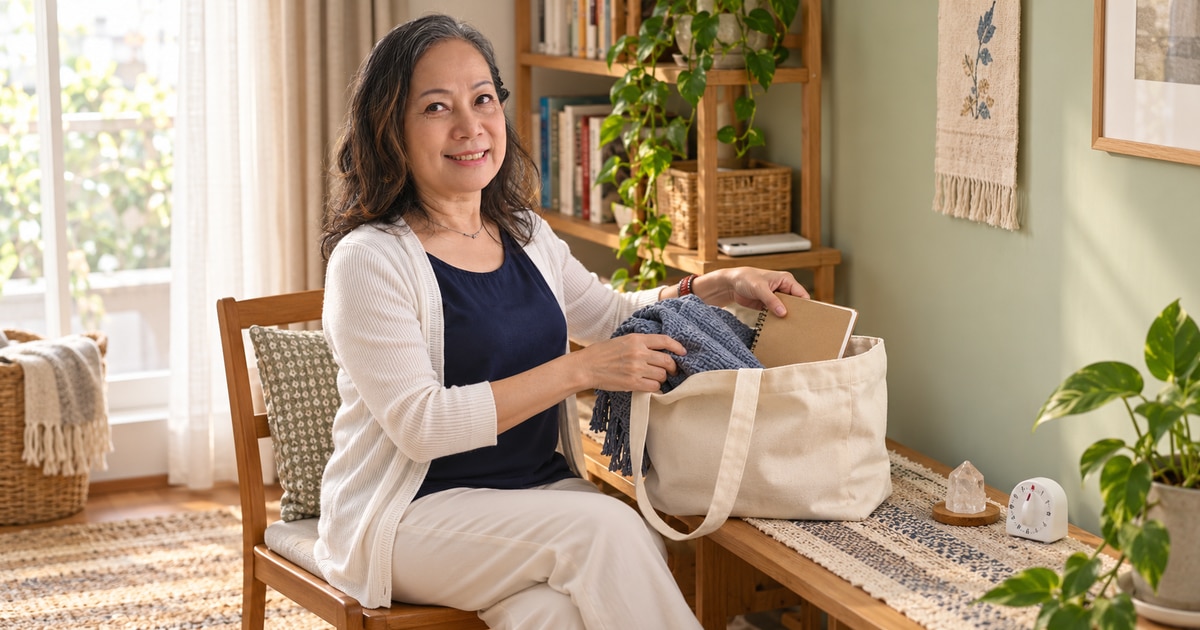
A meditation space can be a small invitation to pause. It does not need to look like a retreat or stay untouched by ordinary life. The most useful setup is one you can comfortably use in the home you have.
Choose a place for quiet reflection, prayer, a card pull or another practice that fits your beliefs. You can begin with things you already own.
Setup one: a small corner
If a corner can remain available, place a suitable seat or cushion there and leave enough room to move safely. A folded blanket, a notebook and a comfortable light may be all you need.
Let a meaningful object—a stone, a picture or a small keepsake—mark the space if you like. You do not need a collection. Keep anything fragile or small out of reach of children and pets.
Setup two: an ordinary chair
A chair can make the practice more accessible when floor sitting is uncomfortable. Choose support that suits your body, with a cushion or foot support if helpful. You do not have to hold a prescribed pose through pain.
Keep a journal nearby, or use a small tray you can put away afterward. A shared dining chair can become a reflection seat for a few minutes and return to its usual purpose.
Setup three: a portable kit
For shared rooms, try a cloth bag or box with a notebook, a pen and any small object you enjoy. Add a cushion only if it is useful. Unpack the kit wherever a comfortable, safe place is available.
Putting it away does not weaken the practice. A portable setup can be the right answer for a busy household, a small apartment or changing accessibility needs.
A quick comfort check
- Can I enter and leave the space easily?
- Is the seat comfortable enough for a short session?
- Is the light sufficient without feeling harsh?
- Can I hear anything I need to respond to?
- Can I put the items away safely afterward?
Work with noise rather than waiting for perfection
You may prefer a quiet time, a closed door or a simple agreement with people at home. If you use headphones or earplugs, remain able to meet any responsibilities that need your attention.
A phone can serve as a timer if that is what you have; silence unnecessary alerts and place it where you are not tempted to browse. There is no need to buy another device to qualify for a practice.
Choose atmosphere gently
Use a regular lamp or a battery light instead of an open flame. You can keep the space scent-free, especially around people or animals sensitive to smoke and fragrance.
If crystals, cards or a prayer image are meaningful to you, include them in a way that fits your tradition and budget. The objects support the intention; they do not have to prove anything about the room.
Let the first session be small
Choose a short period, notice your surroundings and let breathing remain natural. You may write one line or simply sit. Missing a day does not create a debt to make up.
NCCIH notes that meditation is not comfortable for everyone. Change or stop a practice that leaves you distressed, and seek suitable support when needed. A welcoming space gives you room to choose.
It’s interesting how the article emphasizes the importance of natural light and soft lighting. The suggestion to use jasmine or lavender for their calming aromas is also quite insightful and aligns with aromatherapy principles.
The article effectively covers the essentials of crafting a meditation space. The advice on lighting and natural elements can help create an ideal atmosphere for relaxation and focus. Crafting such a space seems very achievable with these tips.
The article provides a practical guide for setting up a meditation space, focusing on both aesthetic and functional aspects. Choosing a room with natural light and incorporating natural elements like plants and water features can indeed create a tranquil environment.
Bringing elements from nature into your meditation space is a great idea. This not only beautifies the area but also promotes a sense of peace. I appreciate the specific recommendations for plants and decorative items.
The concept of creating a personalized sanctuary at home for meditation is well-articulated. The emphasis on choosing a space where one feels instantly relaxed is crucial for effective meditation practice.